Chapter 42: Case Study: Reputation Crises
Key Takeaways - The first response is vital: A slow or defensive initial response can do more damage than the crisis itself. - Crises can be systemic: A poor reputation is often a symptom of underlying business practices. - Empathy is mandatory: Communication must prioritize the concerns of those affected over the image of the brand.
This chapter examines two major reputation crises and the lessons provided by their failures.
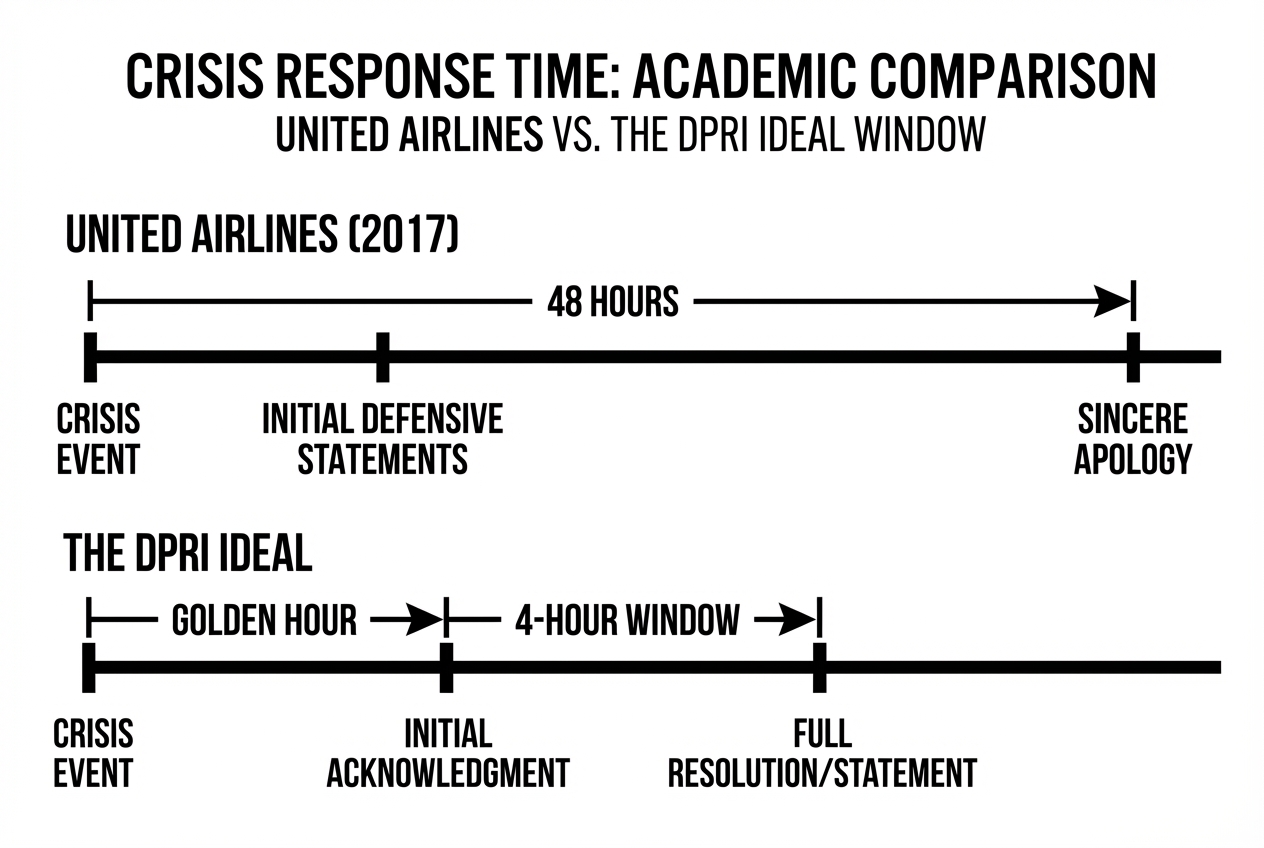
United Airlines: The Delay
After a video of a passenger being forcibly removed went viral, the company's initial response used corporate jargon and lacked empathy. It took two days for a sincere apology to be issued. The Lesson: Speed and tone are critical. The 4-hour window passed without a human response, allowing the public to define the narrative for the next several years.
Byju's: Systemic Missteps
This case shows that a crisis is not always a single event. Allegations regarding aggressive tactics and a lack of transparency created a pattern of behavior. The Lesson: Proactive reputation management cannot fix a disconnect between brand promises and actual business practices. Ethical operations are the foundation of any recovery.
Chapter 42 Toolkit: Learning from Crises
Practical Exercise
Exercise: Rewrite the Response Find a recent defensive corporate statement. Rewrite it to be more empathetic, transparent, and direct. Avoid all jargon and professional "hedging" language.
DPRI CONNECTION
Crisis failures lead to catastrophic drops in Sentiment and Share of Voice. These events are permanently indexed by search engines and AI, highlighting why the 4-hour response window is a strategic necessity.
Next: Not all failures are crises—some are just poorly planned campaigns. Chapter 43 looks at the lessons learned from tone-deaf marketing.