Chapter 21: Measuring Success in Digital PR
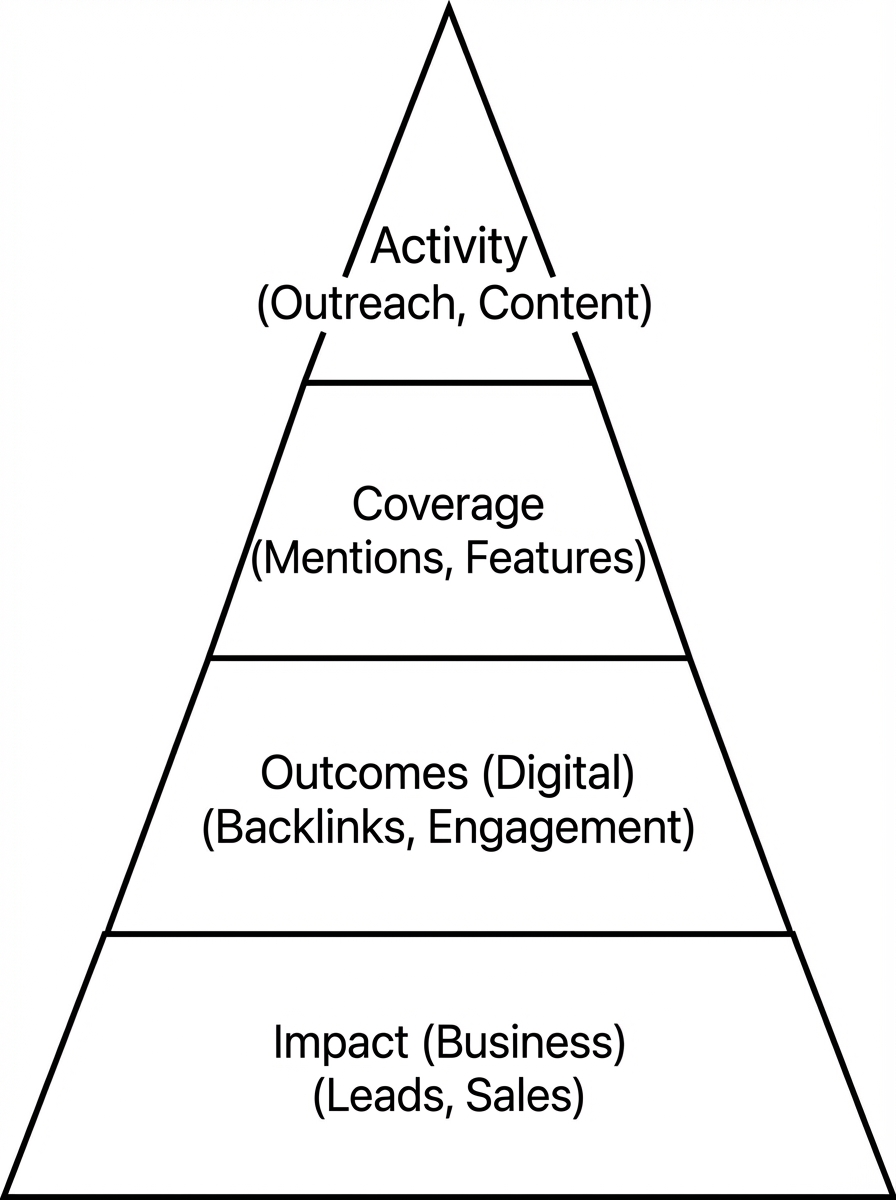
Key Takeaways - Measurement proves value: Data helps you demonstrate the return on investment (ROI) of your work, moving it from a cost center to a value driver. - Focus on what matters: Modern measurement focuses on meaningful metrics like reach, engagement, and conversions—not outdated ones like Ad Value Equivalency (AVE). - Start with goals: A successful plan begins with clear, SMART goals that align with business objectives. - The DPRI Method makes this systematic: Every PR activity maps to measurable digital terms.
PR Measurement & AI Strategy
This presentation covers modern measurement frameworks and AI-powered analytics for Digital PR.
In Digital PR, you can track the results of your work with data. This is a fundamental change from traditional PR, where proving the value of a campaign was often difficult. This chapter covers the basics of measuring success and moving toward true accountability.
This is where the DPRI Method becomes operational. Everything built in the previous modules—the channels, the content, the crisis response—now gets measured and attributed.
Why Measurement is Important
- It Shows Your Value: Data demonstrates the ROI of your work to stakeholders.
- It Helps You Improve: Tracking results identifies what is working and what is not.
- It Helps You Set Better Goals: Knowing your numbers allows for realistic and specific future targets.
Set SMART Goals
Your goals should be SMART (Specific, Measurable, Achievable, Relevant, Time-bound).
From Vague to SMART: - Vague: "Get more media coverage." - SMART: "Secure 10 media placements in top-tier tech publications in the next three months." - Vague: "Improve our website traffic." - SMART: "Increase referral traffic from PR efforts by 20% in the next six months."
Key Areas to Measure
- Media Coverage: Quantity and quality of press mentions.
- Social Media Engagement: Likes, shares, and meaningful interactions.
- Online Reviews: Changes in ratings and sentiment over time.
- Brand Mentions: Analysis of the context and sentiment of mentions.
- Website Traffic and SEO: Impact of PR on traffic and keyword rankings.
- Share of Voice: Your visibility compared to competitors.
- Conversion Rates: How PR contributes to lead generation and sales.
Measurement in 2026: The Reality
Vanity vs. Value Stakeholders now ask what business results were driven, not just how many people saw a campaign. Avoid outdated metrics like AVE, which use arbitrary multipliers. Instead, focus on engaged impressions, referral conversions, and AI citation rates.
New Metrics to Track - AI Citation Rate: How often AI assistants mention your brand. - Share of Search: Your branded searches versus competitors. - Referral Conversion Rate: The percentage of PR-driven traffic that takes a desired action.
Chapter 21 Toolkit: The Foundations of Measurement
Practical Exercises
Exercise 1: SMART Goal Conversion Take a vague goal like "We want to do better on social media" and convert it into a SMART goal with specific targets for engagement rate and posting frequency for a specific quarter.
Exercise 2: Measurement Audit List every metric you currently track. For each, answer whether it directly connects to a business goal. Identify three vanity metrics you can stop tracking and three value-driven metrics you should start monitoring.
DPRI CONNECTION
The DPRI Method is fundamentally a measurement system. Each of the 726+ correlations represents a hypothesis you can test: did this specific PR activity produce the intended digital outcome?
Next: Knowing what to measure is the first step. Chapter 22 goes deeper into measuring the specific impact of PR on business outcomes like traffic and SEO.