Chapter 17: The Reputation Crisis Response Playbook
Key Takeaways - Preparation is everything: A crisis is not the time to start planning. A playbook allows for a fast and effective response. - The 4-Hour Window is real: In the age of social media, you have approximately 4 hours to respond before the narrative is set by others. - Clarity is key: A simple playbook with clear roles and pre-approved statements is more effective than a complex document. - Practice makes perfect: Your crisis playbook should be a living document that is practiced through simulations.
Digital Crisis Response System
This presentation covers the framework for rapid and effective crisis response in the digital age.
An online crisis can happen to any brand at any time. A crisis playbook is a set of procedures and communication templates for responding to different types of problems.
This chapter introduces the Reputation Crisis Response Playbook, a framework refined over two decades of crisis management.
Why You Need a Crisis Playbook
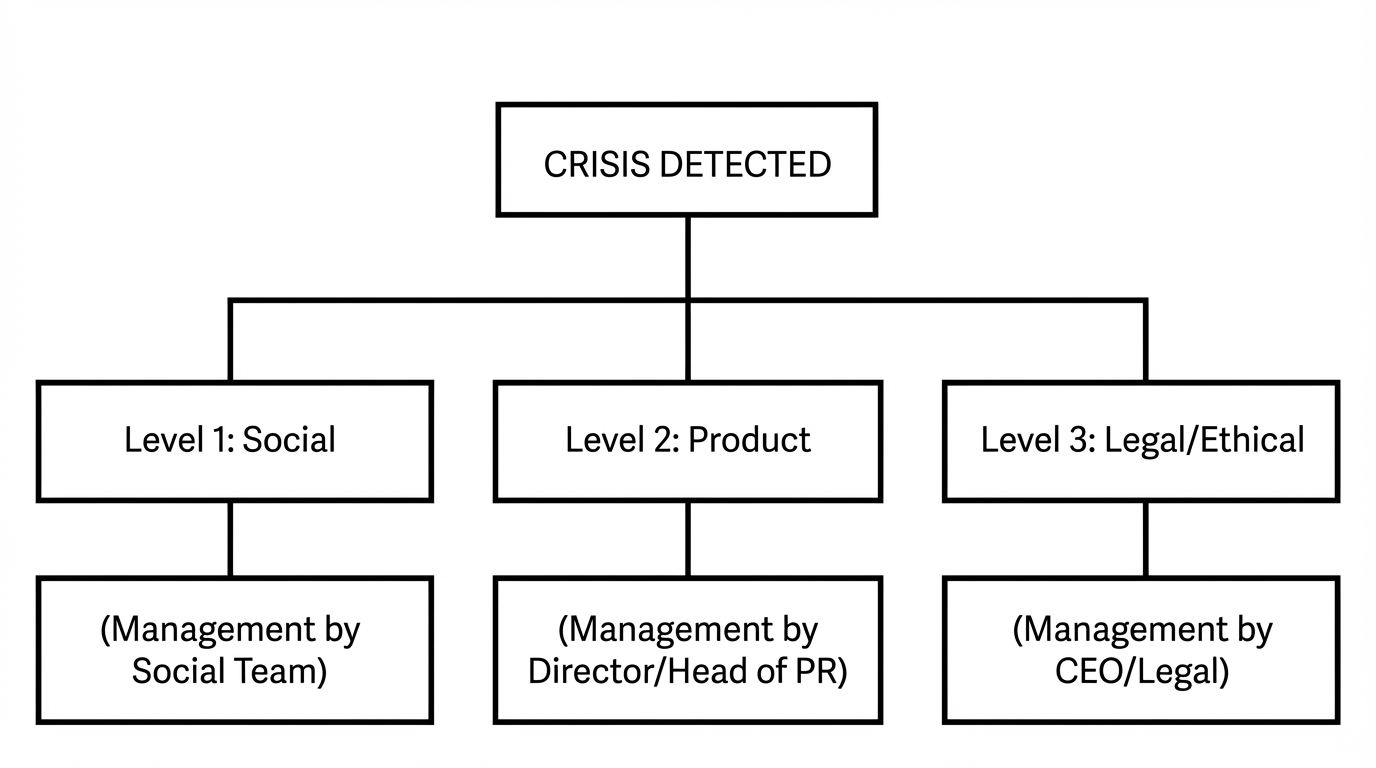
When a crisis hits, there is no time for extended deliberation. You must act fast. A playbook gives you a plan to follow so you can handle the situation without panicking and make smart decisions under pressure.
How to Create a Simple Crisis Playbook
- Identify Potential Scenarios: Common crises include product quality issues, data breaches, public relations disasters, and employee-related incidents.
- Define a Crisis Team: Decide who is in charge—typically the Head of PR, Head of Customer Service, and the CEO.
- Create Action Plans: For each scenario, write down the key steps.
- Prepare Template Statements: Pre-approved "holding statements" and apology templates save critical time in the first hour.
- Keep it Updated: Review your playbook every six months to ensure contacts and processes are still current.
The Severity Matrix
Use this to quickly assess how serious a situation is:
| Level | Indicators | Response Time |
|---|---|---|
| 1: Low | Under 100 mentions, isolated complaint | 24-48 hours |
| 2: Medium | 100-1,000 mentions, limited journalist interest | 4-8 hours |
| 3: High | 1,000-10,000 mentions, multiple media outlets | 1-2 hours |
| 4: Critical | 10,000+ mentions, national media coverage | Immediate |
The 4-Hour Response Window Research shows that in the age of viral social media threads, the traditional 24-hour news cycle is dead. If you have not issued a transparent, human response within 4 hours, the narrative is often captured by critics. The most effective strategy is full disclosure: provide the facts, avoid corporate jargon, and be the first source of truth.
Escalation Matrix
| Level | Primary Handler | Escalate To |
|---|---|---|
| Level 1 | Social Media Manager | PR Manager |
| Level 2 | PR Manager | Head of Communications |
| Level 3 | Head of Communications | CEO and Legal |
| Level 4 | CEO and Crisis Team | Board of Directors |
Chapter 17 Toolkit: Building Your Crisis Playbook
Practical Exercises
Exercise 1: Mini-Playbook Creation Pick one crisis scenario for a business you know. Define the severity level, the members of the crisis team, the first three actions to take in the first 30 minutes, and a draft holding statement.
Exercise 2: Audit Your Preparedness Score your organization on whether you have a documented playbook, whether the team knows their roles, and whether you have practiced a simulation in the last six months.
DPRI CONNECTION
Crisis communications is a core PR Activity. Rapid response within the 4-hour window allows you to control the narrative, which directly impacts Sentiment and Share of Voice outcomes.
Next: A playbook needs monitoring to be effective. Chapter 18 covers the Social Intelligence System—the infrastructure for detecting and routing issues in real-time.