Chapter 12: Storytelling for Digital PR
Key Takeaways - The customer is the hero: Effective brand stories focus on the customer's journey, not the brand's achievements. - The brand is the mentor: Your role is to guide the hero (customer) to success, providing them with the tools or knowledge they need. - Stories are everywhere: You can find powerful narratives in your company's origin, your customers' successes, and even your data. - In the AEO era, stories are your moat: AI can summarize facts. Only humans can tell stories that resonate.
People are wired to connect with stories. A good story can make your brand more memorable and relatable than a list of facts and figures. In Digital PR, storytelling is how you turn your message into something people actually care about.
The Soul of the Story When AI summarizes your industry, it produces the statistical average of everything it's trained on. The brands that stand out—the ones that get cited in AI answers, that earn journalist attention, and that customers remember—are the ones with distinctive stories. AI can tell you what happened; only you can tell why it matters.
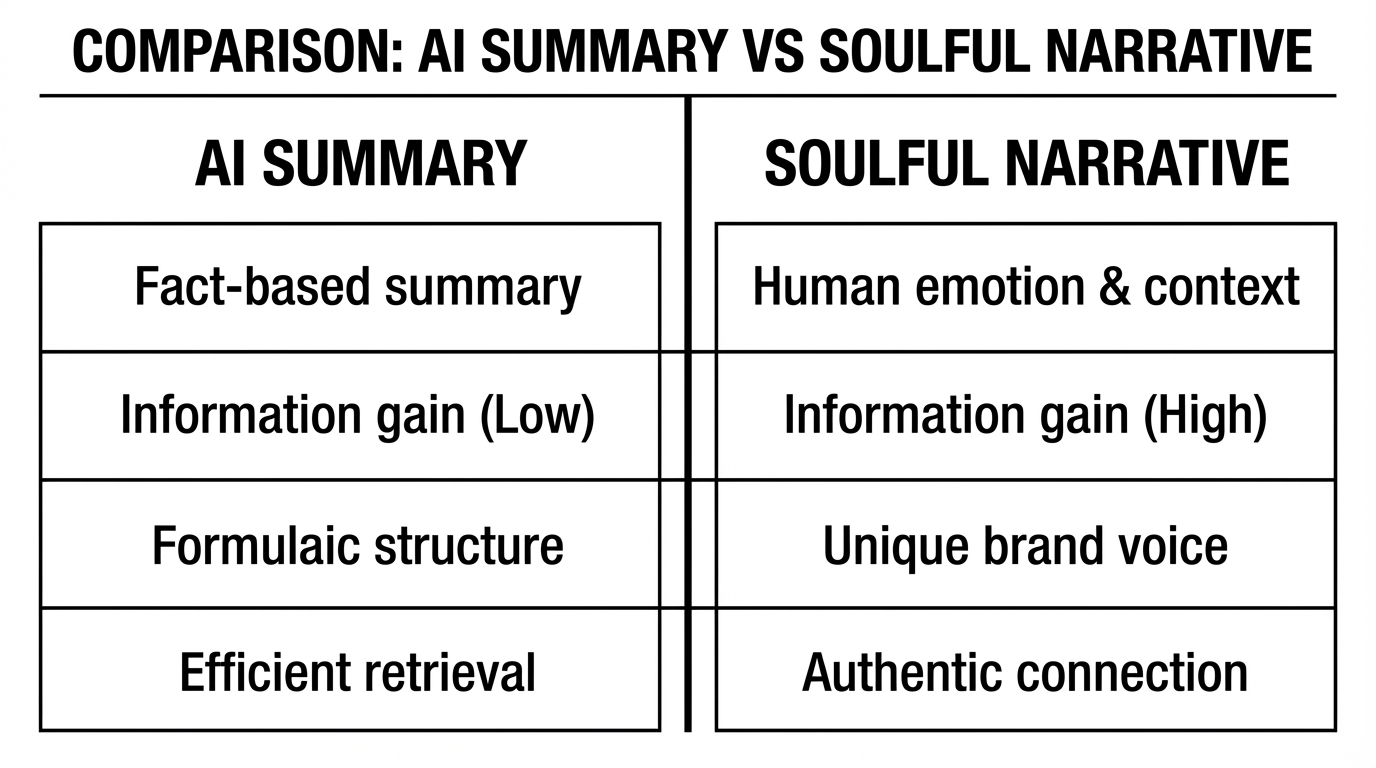
Why Storytelling Works
- It's Memorable: People remember stories much better than they remember raw data.
- It Creates an Emotional Connection: Stories make people feel something, which is a powerful way to build a connection with your brand.
- It Simplifies Complex Ideas: A good story can make a complicated topic easy to understand.
Key Elements of a Good Brand Story
Every good story has a few basic elements:
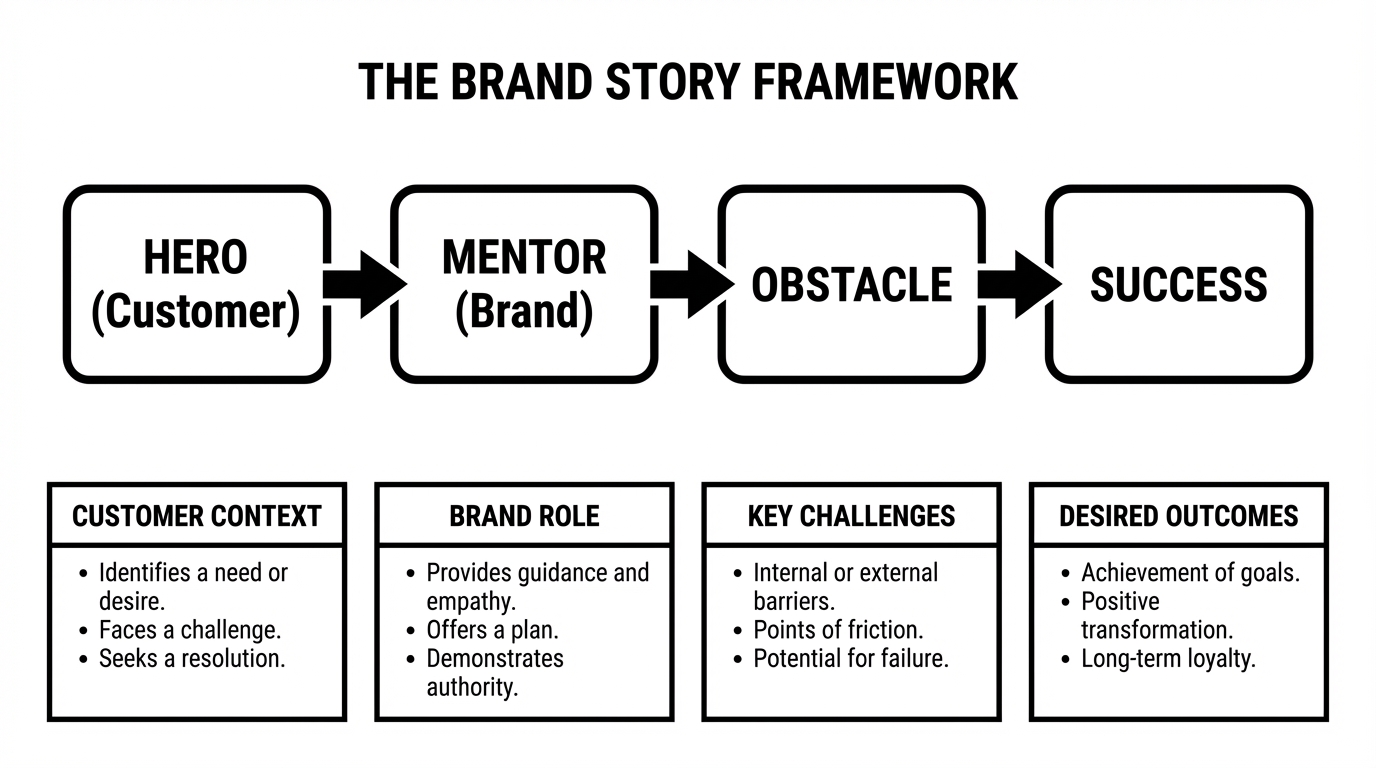
- The Hero: The customer and their problems.
- The Goal: What the hero wants to achieve.
- The Obstacle: What is stopping the hero.
- The Mentor: The brand, which provides the tool or knowledge to help.
- The Success: The hero achieving their goal, thanks to the brand.
Example: A small business owner (Hero) wants to grow their business (Goal) but doesn't know how to market online (Obstacle). A marketing software company (Mentor) provides easy-to-use tools, allowing the owner to launch a successful campaign and grow their business (Success).
Find Your Brand's Story: A Worksheet
Use these questions to uncover the stories within your own brand:
- The Founder's Story: Why did you start this company? What was the problem you were obsessed with solving?
- The Customer's Story: Who is a customer that has had a major success using your product? What was their life like before and after?
- The Employee's Story: Who on your team has a unique passion or skill that relates to your brand's mission?
- The Data Story: What is the most surprising or interesting piece of data you have about your customers or your industry?
Storytelling Across Different Channels
| Channel | Format | Story Length | Example |
|---|---|---|---|
| Blog Post | Full narrative with details | 800-1,500 words | Customer case study with before/after |
| Professional insight + personal angle | 150-300 words | "3 years ago, I almost quit. Here's what changed..." | |
| Visual-first, caption supports | 50-150 words | Photo of product in use + customer quote | |
| Twitter/X | One punchy insight | Under 280 characters | "We surveyed 1,000 customers. The #1 complaint? Not what we expected." |
| Video | Show, don't tell | 60-180 seconds | Customer testimonial with before/after footage |
Real Example: A Story That Worked
The Brand: Paperboat (Indian beverage company)
The Story Structure: - Hero: Indian adults who grew up in the 80s-90s - Goal: Reconnect with childhood memories - Obstacle: Modern life is rushed; those flavors are forgotten - Mentor: Paperboat brings back drinks like Aam Panna and Jaljeera - Success: Every sip is a time machine to simpler days
How They Told It: - Packaging featured hand-drawn illustrations of childhood scenes. - Social media posts asked "What reminds you of summer vacations?" - TV ads showed grandmothers, not the product. - They never talked about ingredients or health benefits.
Result: Built a 600+ crore brand by selling nostalgia, not drinks.
The Te-A-Me #TeaForTrump Story Structure
When we built the #TeaForTrump campaign, the story wasn't about tea at all:
- Hero: American voters concerned about provocative political statements.
- Goal: Wanting the candidate to "calm down."
- Obstacle: No way to communicate this as an individual.
- Mentor: Te-A-Me Tea, offering a symbolic gesture (green tea for calmness).
- Success: 6,000 people signed a petition to send the tea; global coverage ensued.
The tea was a prop. The story was about collective action and cultural commentary. That's why it earned coverage in 300+ publications across 38 countries—journalists don't cover tea, but they cover stories.
Chapter 12 Toolkit: The Art of the Story
Practical Exercises
Exercise 1: Story Framework Practice Pick a brand you know. Identify the Hero, Goal, Obstacle, Mentor, and Success. Now write it as one paragraph of five or six sentences.
Exercise 2: The Campfire Test Read your brand's About page out loud. Would anyone want to hear this around a campfire? If not, rewrite it starting with the problem that bothered you, what you tried that didn't work, and the moment you figured out what to build.
DPRI CONNECTION
Storytelling is the "how" behind content that performs. In the DPRI framework, storytelling is what transforms ordinary content into link-worthy, coverage-worthy, and share-worthy assets.
Next: Stories are often told best through movement. Chapter 13 covers Video and Visual Content Creation—the most engaging way to bring your brand narratives to life.