Chapter 3: Principles and Evolution of Digital PR
Key Takeaways - Transparency is non-negotiable: In the digital age, honesty builds trust and credibility, especially during a crisis. - Engagement is a two-way street: Brands must listen, respond, and participate in conversations to build a loyal community. - Storytelling over selling: People connect with narratives. The most effective PR tells a compelling story where the brand plays an authentic role. - The DPRI Method is the Operating System: These principles need a systematic framework to produce consistent results.
The Operating System Metaphor
Digital PR needs a framework to coordinate between PR activities and digital outcomes. Think of the DPRI Method as an "Operating System."
The principles in this chapter are the design philosophy of that system—the underlying values that guide every decision. The DPRI Method itself (introduced in Chapter 4) consists of the specific mechanisms that turn those principles into action. Principles tell you why to do things; the method tells you what to do and how to measure it.
Core Principles of Digital PR
Principle 1: Maintain Transparency
It is difficult to conceal information today. Every statement can be fact-checked. Brands that operate with openness build trust. Those that don't are exposed.
Example: KFC's Apology (2018) When KFC in the UK faced a supply shortage, they published a humorous apology that acknowledged the problem directly without corporate jargon. This transparency turned a negative story into a positive brand moment.
Field Manual: The Holding Statement Draft holding statements for potential crises (data breaches, product issues) before they happen. The 4-hour response window does not leave time to draft from scratch.
Principle 2: Engage with Audiences
The model has shifted from broadcasting to participating. This involves listening to audience feedback and responding in real-time.
Example: Wendy's on Social Media Wendy's uses direct, humorous engagement to build a distinct voice. This works because the team has permission to take risks and engages in real-time rather than waiting for committee approval.
Principle 3: Utilize Narrative
Audiences connect with stories more than sales messaging. Effective Digital PR positions the brand as a mentor that helps the customer (the hero) solve a problem.
Example: Dove's "Real Beauty" Dove uses storytelling to address societal standards, creating an emotional connection that transcends the product.
AI cannot replicate genuine narrative. It can summarize facts, but it lacks the authentic human experience that makes a story resonate.
Principle 4: Leverage Data for Decision-Making
Digital tools provide measurable results. This data should inform strategy, not just justify it after the fact. At a minimum, you should understand your traffic sources and referral conversions. You cannot improve what you do not measure.
Principle 5: Integrate with Marketing Functions
Digital PR is most effective when coordinated with SEO, social media, and advertising. Silos kill effectiveness. A weekly cross-functional meeting can prevent weeks of misaligned messaging.
The Evolution of Digital PR: A Deeper Timeline
The 1990s: The Beginning
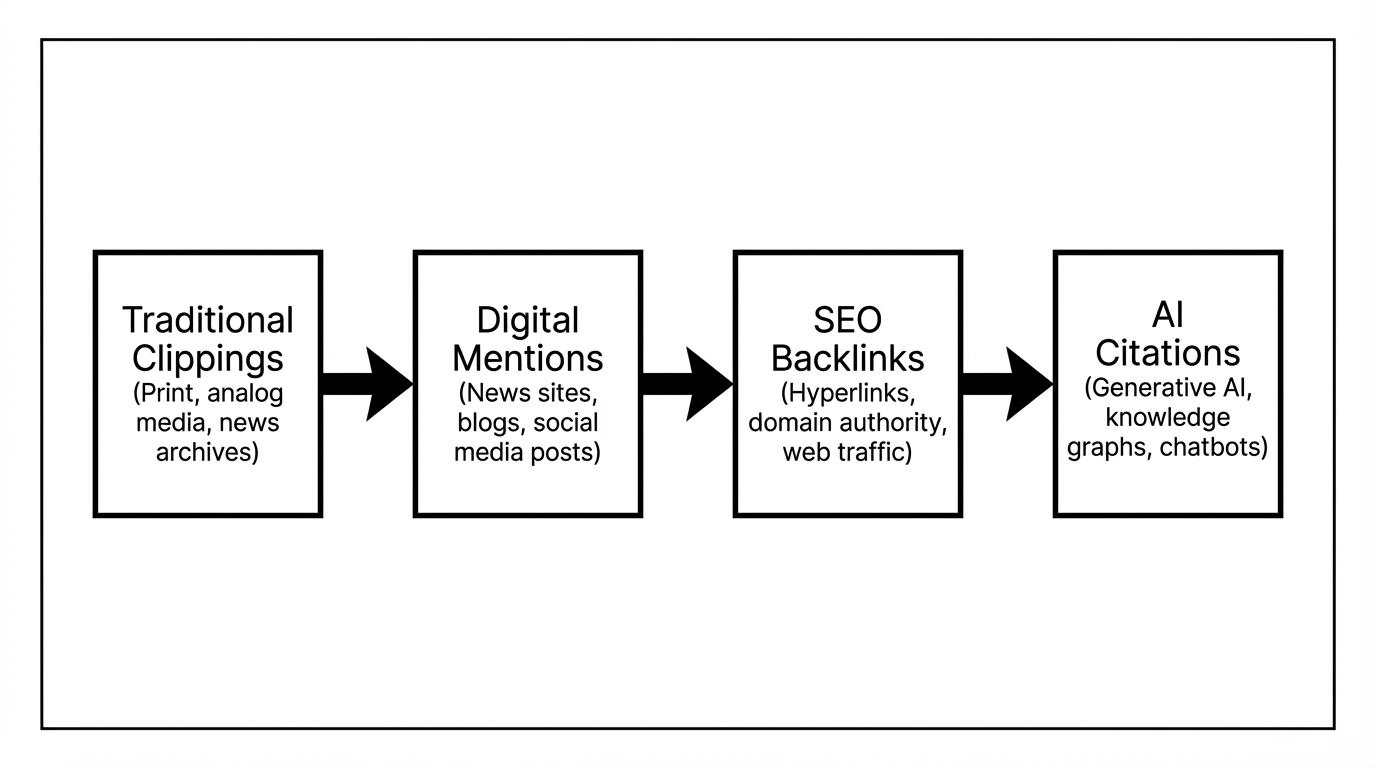
PR remained one-way. Email press releases replaced faxes, but distribution was still a broadcast. Measurement was limited to clippings.
The 2000s: Social Media Arrives
Real-time, two-way conversation became possible. Power shifted to audiences. Measurement of engagement (likes, shares) emerged.
The 2010s: Content is King
Content marketing and SEO became central. The goal shifted to getting coverage that produces backlinks. PR became measurable in digital marketing terms.
2020s: AI and Data
AI-assisted workflows increased efficiency. Data analytics began to demonstrate true ROI.
2025+: The Answer Engine Era
The audience is no longer just humans; it is the machines that answer questions. Visibility is now defined by citations in AI-generated responses.
What's Next for Digital PR
More Visuals: Short-form video requires PR teams to think in 15-60 second formats.
PR and Commerce Convergence: PR efforts are now directly tied to sales through shoppable content and direct attribution.
Trust is the Ultimate Metric: In a world of misinformation, being a trusted source is a brand's biggest asset. Earning coverage in credible publications builds the signals that both humans and AI rely on.
Chapter 3 Toolkit: Principles in Action
Practical Exercise: Ethical Dilemma Scenario
Scenario: A popular influencer posts an inaccurate negative review. Task: How would you respond publicly? Consider transparency, tone, and whether to engage publicly or privately.
Self-Assessment
Rate your practice (1-5) on: - Operating with transparency. - Engaging in two-way conversations. - Using data to inform decisions. - Coordinating with other marketing functions.
DPRI CONNECTION
Principles without a system produce inconsistent results; systems without principles produce hollow outcomes. The DPRI Method turns these values into repeatable, measurable practice.
Next: Chapter 4 introduces the DPRI Method: Integration Architecture—the systematic framework that turns these principles into a measurable business discipline.