Key Takeaways - Digital PR adapts traditional public relations for the online world, focusing on building reputation through channels like search engines, social media, and blogs. - The internet has shifted PR from a one-way broadcast to a two-way conversation between brands and their audience. - The PESO model (Paid, Earned, Shared, Owned) is the foundational framework for creating an integrated and effective digital strategy. - Digital PR produces measurable digital marketing outcomes—backlinks, search rankings, referral traffic—not just awareness.
Digital PR Framework: A Strategic Roadmap
The following presentation provides a comprehensive visual overview of the Digital PR framework and strategic approach covered in this chapter.
Defining Digital PR
Digital PR is the practice of managing how brands are discussed and perceived online.
Definition: Digital PR is the use of digital channels to manage brand perception and relationships with online media, journalists, and creators. Its primary goals are to secure positive online mentions, improve search engine visibility, and engage directly with target audiences.
Digital PR is not simply traditional PR with a website. It is the strategic integration of public relations activities with measurable digital marketing outcomes.
In the early 2000s, this practice was often described as online reputation management with SEO characteristics or blogger outreach. Today, the DPRI Method makes this integration explicit: every PR activity must connect to a digital outcome that can be tracked and valued. This distinction is what separates a modern Digital PR program from traditional efforts.
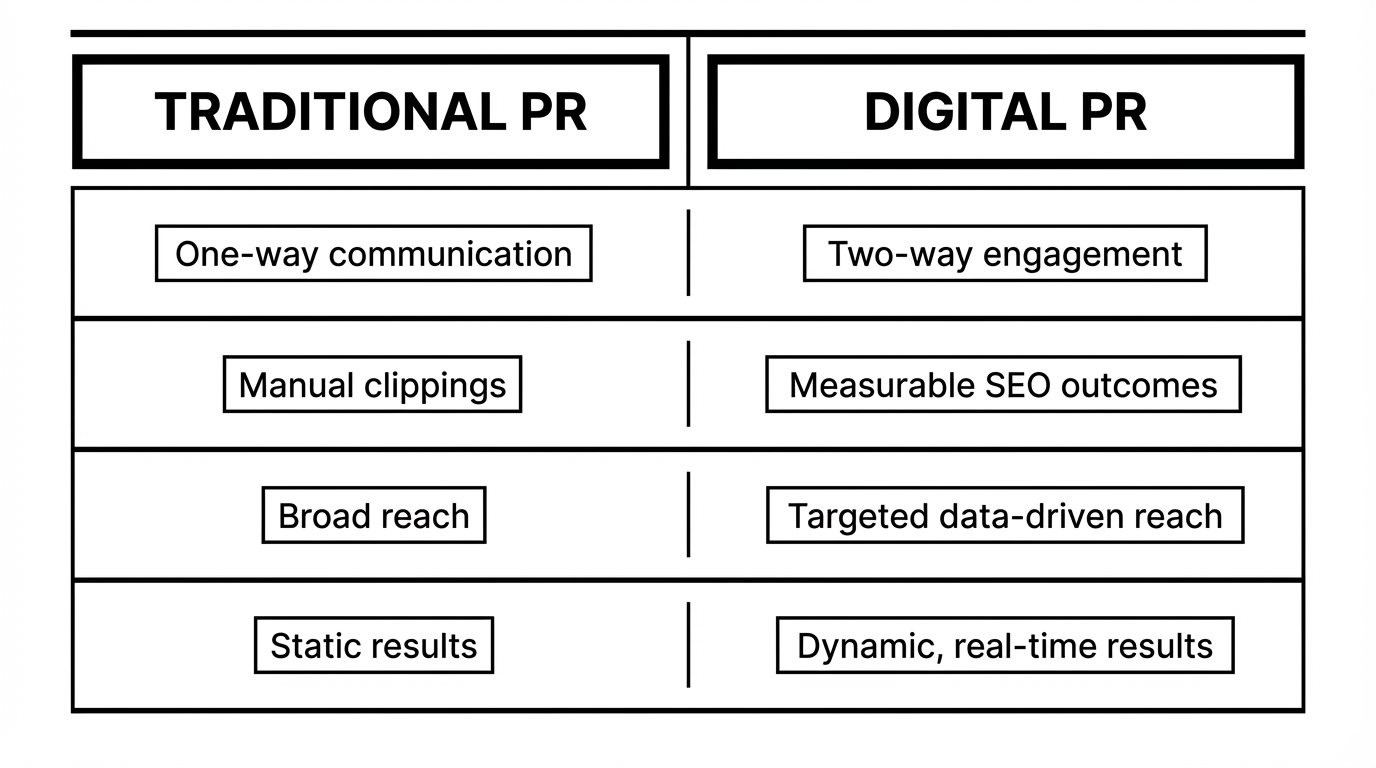
Digital PR vs. Traditional PR: A Comparison
| Feature | Traditional PR | Digital PR |
|---|---|---|
| Channels | Print, TV, Radio | Websites, social media, podcasts, forums |
| Communication | One-way broadcast | Two-way conversation |
| Measurement | Difficult (AVEs, clippings) | Measurable (backlinks, traffic, rankings) |
| Pace | Slow (print cycles) | Real-time (24/7 news cycle) |
| Goal | Awareness | SEO benefits + direct engagement |
| Lifespan | Short-lived | Persistent in search results |