Chapter 50: Presentation and Project Evaluation
Key Takeaways - Constraints force clarity: A ten-slide structure ensures your strategy is focused and concise. - Strategy must lead to measurement: A plan is incomplete without defined KPIs. - Presentation is a deliverable: Professional design and delivery are as important as the ideas themselves.
This chapter outlines the structure for your final Digital PR plan and the criteria by which it should be evaluated. This structure is designed to be used in professional settings when pitching to clients or internal stakeholders.
The 10-Slide Structure
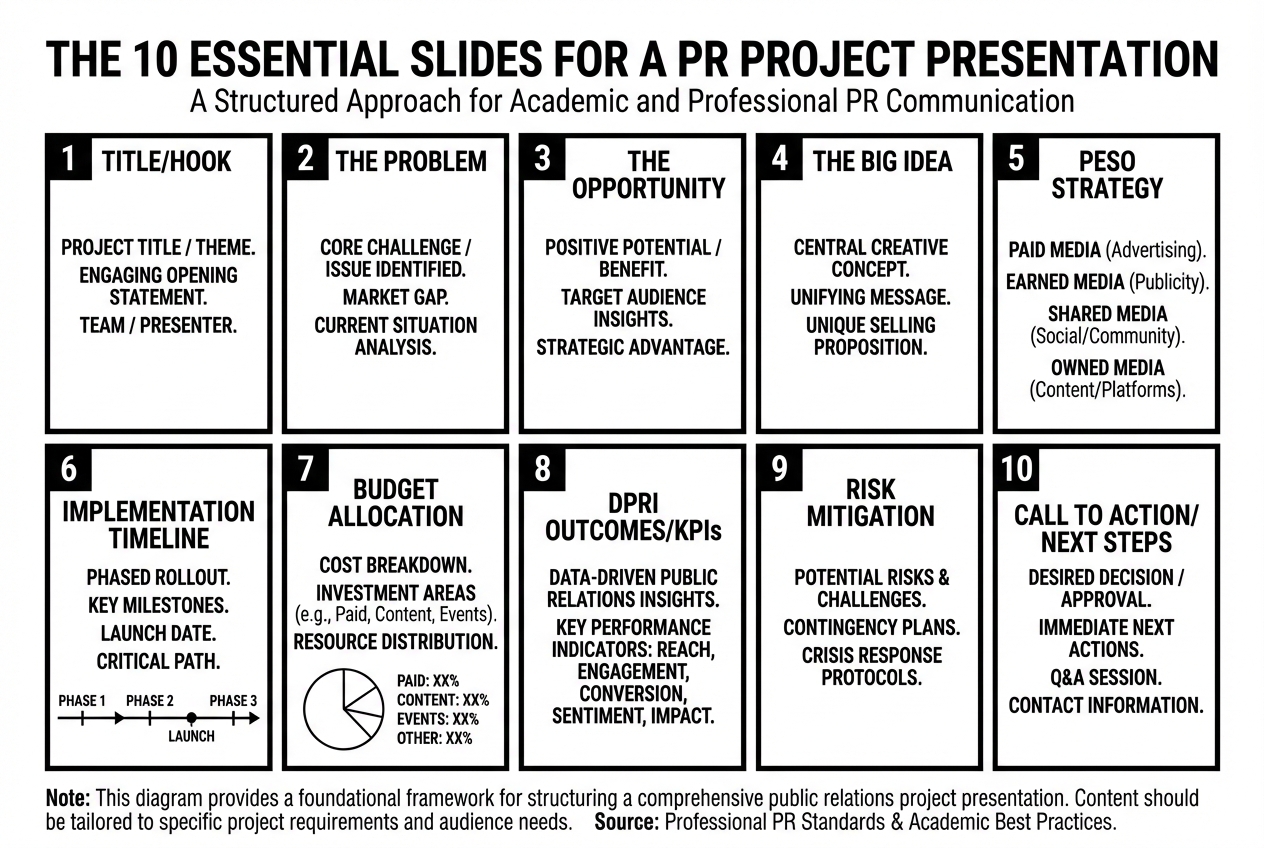
- Title: Name, brand, and campaign title.
- The Brand: Brief overview and competitive landscape.
- The Goal: SMART business and PR objectives.
- Target Audience: Detailed segments and their interests.
- Key Message: The single most important takeaway.
- The Big Idea: The creative heart of the campaign.
- PESO Strategy: How you will use each of the four media types.
- Timeline: Key phases of the execution.
- Measurement: Specific KPIs and tools for tracking.
- Budget: High-level overview of resource allocation.
Evaluation Criteria
- Clarity: Is the plan easy to follow?
- Strategy: Is it likely to achieve the stated goals?
- Creativity: Is the big idea original and engaging?
- Integration: Do all parts of the PESO model work together?
- Professionalism: Is the deliverable polished and accurate?
DPRI CONNECTION
A professional presentation should explicitly map activities to the 22 digital terms. This demonstrates your mastery of the DPRI Method and your ability to drive business results.
Next: To build the 10-slide presentation, you need to do the underlying research. Chapter 51 provides a Detailed Campaign Planning Worksheet.