Chapter 39: Case Study: B2C Product Launch Campaigns
Key Takeaways - Involve your influencers: Co-creating content with influencers is more authentic than simple sponsored posts. - Phased launches build momentum: Teaser phases build anticipation before the main event. - Match influencers to goals: Use different types of creators for credibility versus real-world lifestyle application.
This chapter examines two successful B2C (business-to-consumer) product launch campaigns that prioritized creative engagement over traditional advertising.
Samsung's #Flipvertising
To launch the Galaxy Z Flip phone to a fashion-conscious audience, Samsung challenged creators to produce their own "ads" for the phone. The best user-generated videos were then used as official brand ads. Key Lesson: Giving creators ownership leads to more authentic content that resonates better with their followers.
Lenovo's EGO Watch Launch
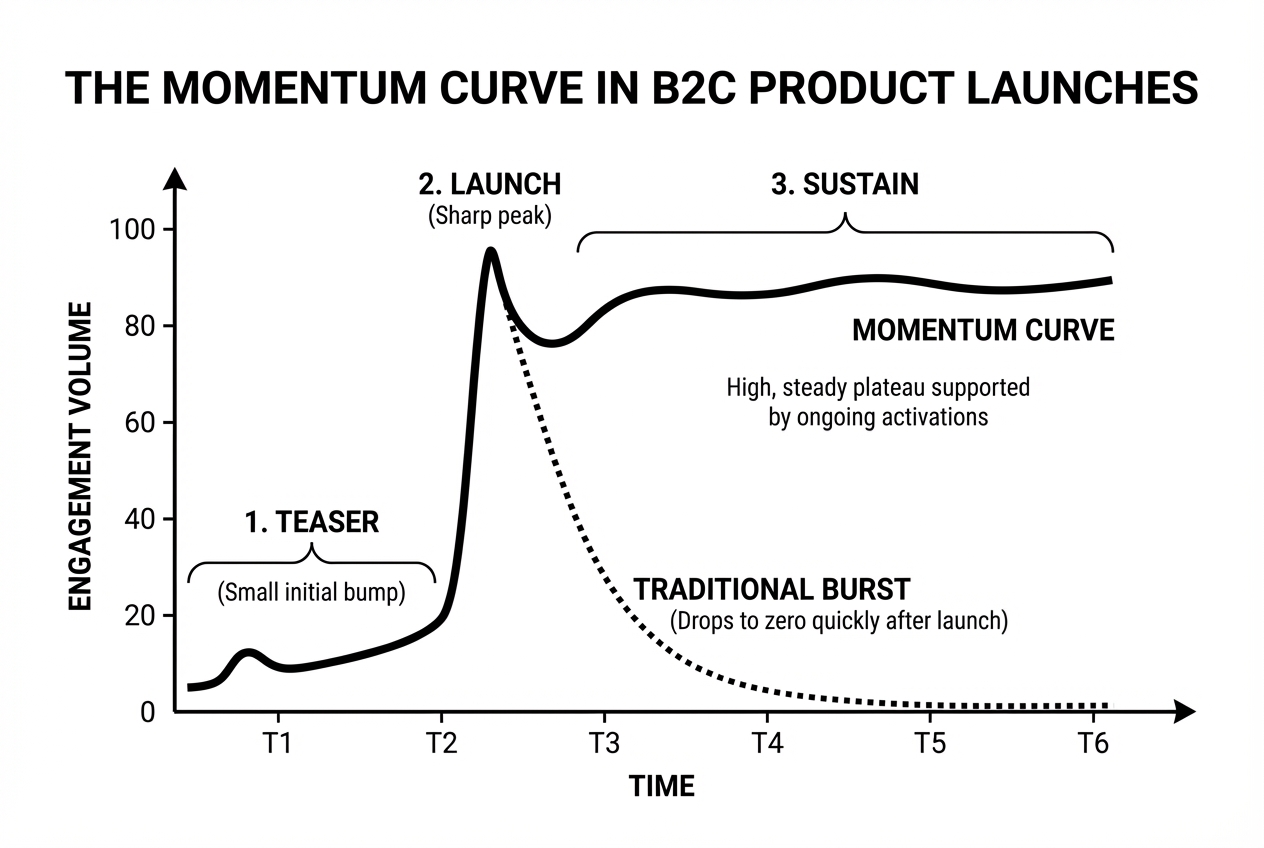
Lenovo used a three-phased integrated campaign: - Phase 1: Teaser: Worked with tech experts to "leak" photos and create speculation. - Phase 2: Launch: Official reviews from top YouTubers and a social media contest. - Phase 3: Sustain: Lifestyle influencers showed the watch in everyday life, while paid ads amplified the top reviews.
Key Lesson: A phased approach builds anticipation and ensures the brand stays in the conversation long after the launch day.
Chapter 39 Toolkit: Creative B2C Launches
Practical Exercise
Exercise: Phased Launch Plan You are launching a new consumer product. Outline a simple 3-phase plan (Teaser, Launch, Sustain). Define one specific tactic for each phase and identify the target audience segment for each.
DPRI CONNECTION
These cases demonstrate high UGC Volume and Social Engagement outcomes. The phased approach in the Lenovo case specifically targets Branded Search Volume over an extended period.
Next: High-budget launches are effective, but Digital PR is also a survival tool for businesses with limited resources. Chapter 40 explores small business success stories.