Chapter 5: Social Media Management & The Social Intelligence System
Key Takeaways - Strategy over presence: Excel on a few relevant platforms where your audience is active rather than spreading thin across all platforms. - Engagement is key: Social media is a conversation. Listening, responding, and providing value build community. - Social media is a PR multiplier: Every social interaction is a reputation touchpoint that produces measurable digital outcomes. - The Social Intelligence System integrates listening, response, and measurement into a unified workflow.
Social Media as Digital PR Infrastructure
Social media is the modern press conference, town hall, and community newsletter combined. For Digital PR professionals, it is the front line for reputation management and brand storytelling. It serves as infrastructure for all other DPRI activities: Media Relations are amplified by sharing, and Crisis Communications happen in real-time on social platforms.
The Social Intelligence System
The Social Intelligence System is a framework for integrating social media with Digital PR objectives. It has three components:
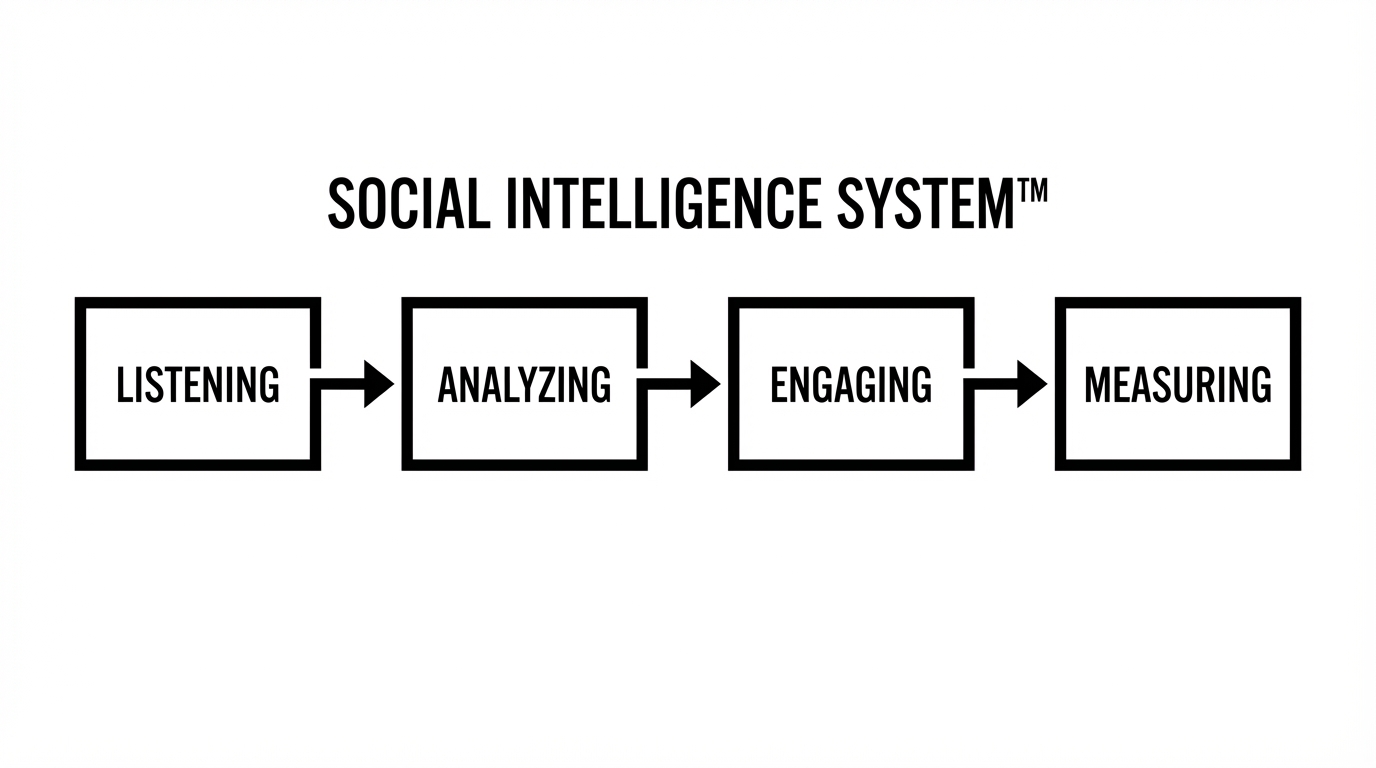
1. Listening (Input)
Monitor what is being said about your brand, competitors, and industry.
2. Response (Action)
Engage with what you are hearing.
3. Measurement (Output)
Track the digital outcomes your activities produced.
Most brands focus only on posting. This system ensures you are also listening and measuring, turning social media into a strategic intelligence function.
Choosing the Right Platforms
Focus your efforts where your audience is most active.
| Platform | Primary Audience | Best For | Organic Reach |
|---|---|---|---|
| Professionals | Thought leadership, B2B | High | |
| 18-34 year olds | Visual products, Reels | Medium | |
| X (Twitter) | News, tech, media | Real-time updates | Medium |
| TikTok | Gen Z, Millennials | Trends, discovery | High |
| YouTube | All ages | Tutorials, long-form | N/A (search-based) |
What Works in 2026
Algorithm Reality Organic reach on many platforms is low. Budget for paid amplification or accept that your content may reach less than 5% of your followers. Short-form video consistently achieves the highest reach.
Content Strategy Behind-the-scenes content and employee-led posts generally outperform polished branded content. Educational material and user-generated content remain highly effective formats.
Response Expectations Audiences expect fast responses. On X, responses are expected within 1-2 hours. On most other platforms, waiting longer than 6 hours can be interpreted as indifference.
Handling Negative Comments
Use this framework for responding to negativity: - Legitimate complaint: Respond publicly, then move to private messages to resolve. - Misunderstanding: Clarify politely and explain the value. - Trolls: Do not engage. - Competitor attack: Document the activity but do not engage publicly.
DPRI Integration: Social Media Outcomes
| Social Activity | Digital Outcomes to Track |
|---|---|
| Posting content | Engagement, Reach, Amplification |
| Community management | Sentiment, UGC Volume |
| Social listening | Share of Voice, Sentiment |
| Influencer collaboration | Follower Growth, Reach |
Chapter 5 Toolkit: Mastering Social Media
Exercise: Platform Selection
Choose two platforms for a local restaurant. Write a sample post for each and define which DPRI outcomes you would track.
Exercise: Crisis Response Drill
A customer posts a viral video of a negative experience at your business. Draft your public response and your internal team message. You have a 4-hour window to act.
DPRI CONNECTION
Social Media Management is one of the core 11 PR Activities. The Social Intelligence System operationalizes social platforms as strategic infrastructure rather than just content channels.
Next: While social media handles the immediate conversation, Chapter 6 explores the engine of persistent visibility: SEO Fundamentals and the shift to Answer Engine Optimization.